

NTU Achieves Record High of 54th in the 2027 QS World University Rankings


瀏覽器版本過舊,或未開啟 javascript
請更新瀏覽器或啟用 javascript
Spotlights


Date: Nov 30, 2022
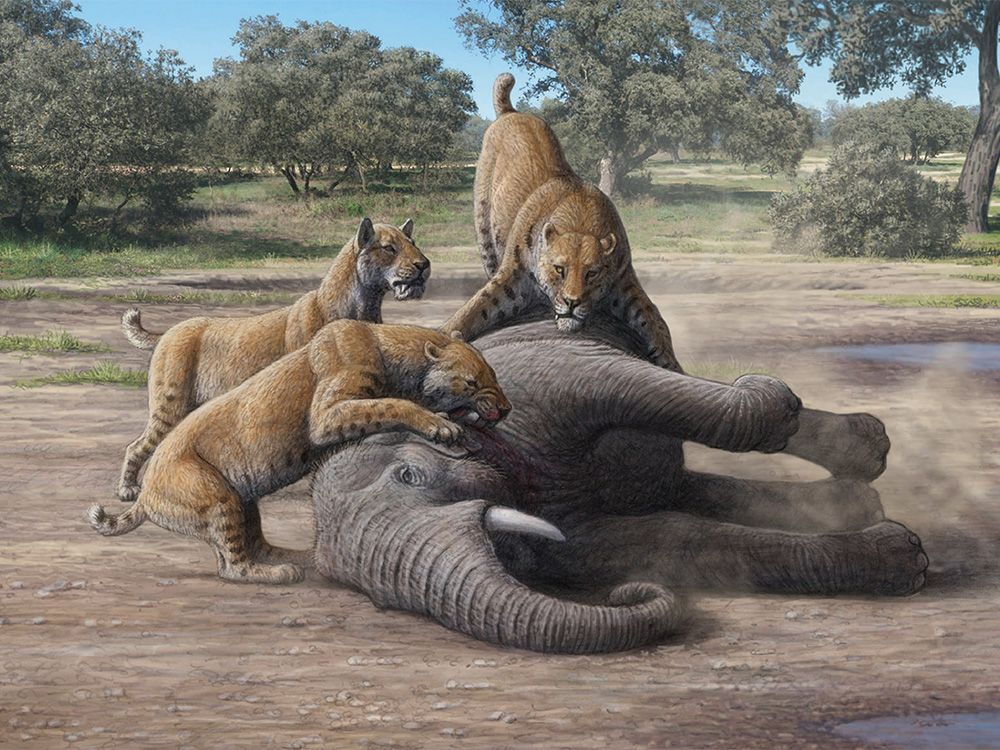
One reconstructed scene in the Pleistocene Park. Three saber-toothed cats preyed on a juvenile mammoth. Illustrated by Mauricio Antón.
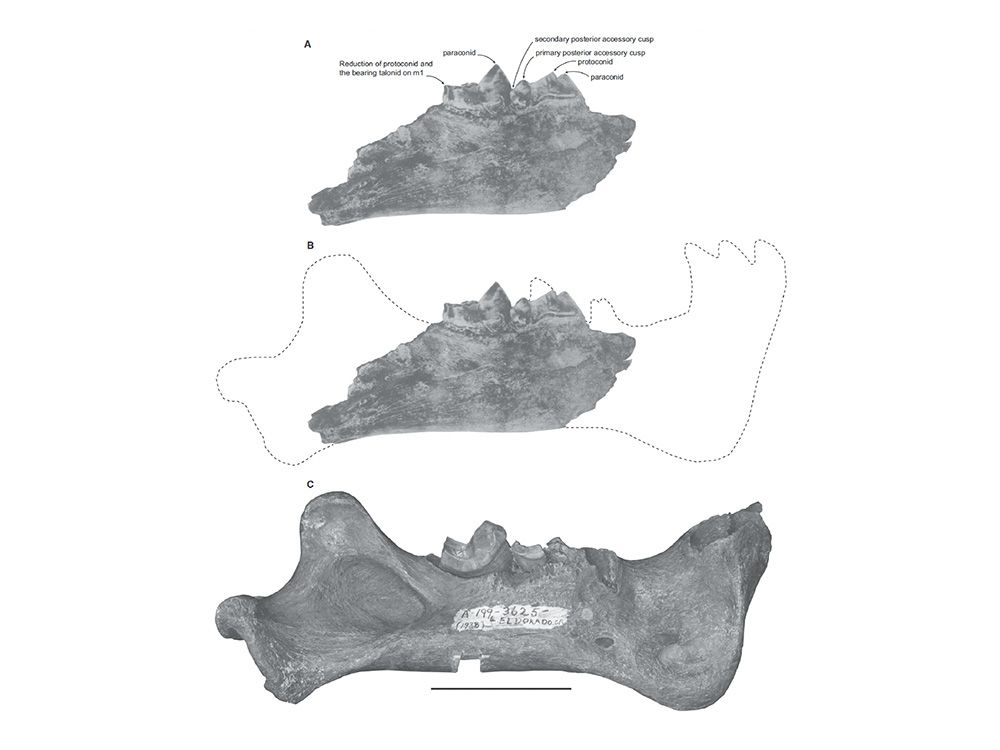
A, the first confirmed saber-toothed cat from Taiwan; B, the reconstructed mandible of the saber-toothed cat from Taiwan; C, a well-preserved mandible of a saber-toothed cat from Alaska, USA.
Associate Professor Cheng-Hsiu Tsai of NTU’s Department of Life Sciences and University of California, Berkeley collaborated on an international paleontology research project, which findings confirmed for the first time that saber-toothed cats (Machairodontinae) once existed in Taiwan in ancient times.
Machairodontinae, including the famous Smilodon and Homotherium, was an iconic Pleistocene carnivore lineage that occupied a critical ecological paleo-niche and is thought to have had a profound impact on ice-age ecosystem structure. Recent ancient molecular studies on Homotherium suggest a wider distribution than that inferred from the fossil record, highlighting a need for additional fieldwork, fossil collection, and research in understudied geographic regions. After the original publication 80 years ago that identified a Pleistocene carnivore fossil as Felis sp. in Taiwan, here we revise its identification and demonstrate the presence of the large machairodontine cat, Homotherium sp., in the Pleistocene of Taiwan, suggesting the eastern-most occurrence of this lineage in Eurasia. Our results also emphasize the importance of fossil curation and in-depth research in elucidating regional hidden diversity and lost ecosystem structure for the understanding faunal turnover and the origin of modern biodiversity.
The study has been published in Papers in Palaeontology on October 28, 2022:
https://onlinelibrary.wiley.com/doi/full/10.1002/spp2.1469
NTU Achieves Record High of 54th in the 2027 QS World University Rankings

2026 NTU Commencement

Southern Ocean "Intermediate Water" Holds the Key to Earth’s Carbon Dioxide Changes

NTU Team Achieves a Highly Cycle-Stable Zirconium Dioxide Antiferroelectric Technology Capable of 100 Million Cycles

Nobel Laureate in Chemistry Joachim Frank Unveils the Legendary Path of Cryo-Electron Microscopy in Transforming Modern Medicine
Current Spotlights
NTU Achieves Record High of 54th in the 2027 QS World University Rankings
2026 NTU Commencement
Southern Ocean "Intermediate Water" Holds the Key to Earth’s Carbon Dioxide Changes
NTU Team Achieves a Highly Cycle-Stable Zirconium Dioxide Antiferroelectric Technology Capable of 100 Million Cycles
Nobel Laureate in Chemistry Joachim Frank Unveils the Legendary Path of Cryo-Electron Microscopy in Transforming Modern Medicine
